Incretin appetite regulation in the brain: how GLP-1 and GIP engage the hypothalamus to support satiety
Appetite is not decided in the stomach. It is decided in the brain — and incretin peptides work by speaking, gently, to the circuits that already hold that decision.
A Panacea Bio Chem engineering brief · by Bogdan Dicoias, Scientist & amino-acid-chain designer
· Subject: incretin appetite regulation in the brain ·
Programme: Septarutide (investigational, Panacea) · Nothing here is medical advice.
Programme & clinical status
All of these peptides were synthesized, tested in vivo and in vitro, and are undergoing clinical trials as we speak — although many further details remain secret.
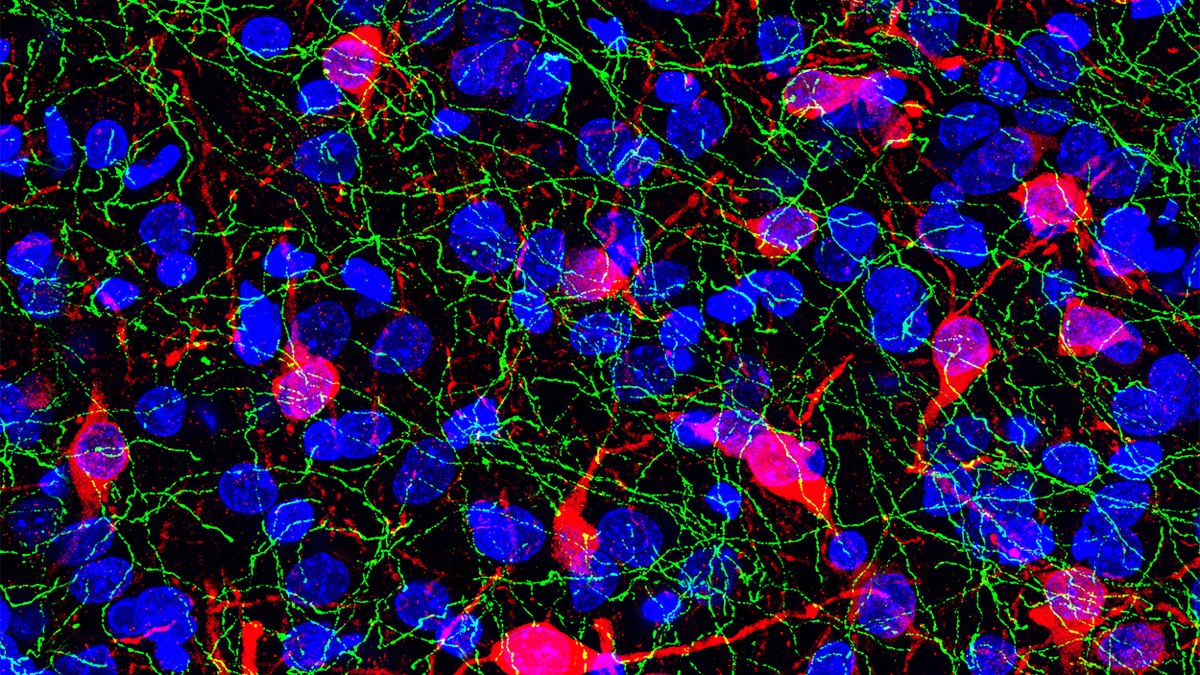
The brain's appetite circuits, imaged neuron by neuron, are the terrain that incretin appetite regulation works on. This brief — and Panacea Bio Chem's Septarutide programme, by Bogdan Dicoias — sits at that meeting point of gut hormone and mind.
Abstract · in brief
Incretin appetite regulation in the brain is the way gut-released peptides such as
GLP-1 and GIP engage the nervous system's own hunger-and-fullness machinery. Their
receptors sit in the hypothalamus — chiefly the arcuate nucleus — and in the
hindbrain, where the blood-brain barrier is permeable. Activating them tips a finely-poised
balance toward the satiety-promoting POMC neurons and away from the hunger-promoting
AgRP neurons, so fullness registers earlier and eating eases without willpower. This brief
explains the appetite circuit in plain language, traces how a gut peptide reaches the brain, tells
the true story of how the brain's appetite hub was mapped, and introduces Septarutide,
Panacea Bio Chem's investigational entry. It is a scientific description, not medical advice.
Topic: incretin appetite regulation in the brain |
Sites: hypothalamic arcuate nucleus · hindbrain area postrema / NTS |
Programme: Septarutide (Panacea Bio Chem, investigational)
1. The brain decides hunger — a balance of two neuron families
It feels as if hunger comes from the belly, but the sensation is assembled in the brain. Deep at
the base of the hypothalamus, a small cluster called the arcuate nucleus acts as an
appetite control tower1. Two opposing families of neurons sit there
side by side, each pulling in the other direction. One family — the POMC and CART neurons —
promotes fullness: when it fires, you feel satisfied and stop eating. The other — the
AgRP and NPY neurons — promotes hunger: when it fires, food becomes the most
interesting thing in the room. Appetite, at any moment, is simply which family is winning.
These two families converge on a single, elegant switch. POMC neurons release a messenger called
α-MSH that presses the melanocortin-4 receptor (MC4R) in a neighbouring hub, the
paraventricular nucleus — and pressing MC4R says enough2. The
AgRP neurons release a molecule that blocks that very same receptor, saying keep going. This
push-pull melanocortin system is the brain's core appetite dial, and it is beautifully sensitive:
people who inherit a weakened MC4R feel hungry more easily, which is one of the clearest proofs that
body weight is governed by a specific, findable circuit rather than by character.
2. How an incretin peptide reaches — and moves — that circuit
Two doorways into the brain
The incretins — GLP-1 and GIP — are released by the gut wall when nutrients arrive, and one
of their natural jobs is to tell the brain that a meal is on the way. But the brain is guarded by the
blood-brain barrier, so how does a gut peptide get a message in? Through two doorways. The first is a
set of small regions that are deliberately unguarded — the area postrema and the
adjacent nucleus tractus solitarius (NTS) in the brainstem, and the median eminence beside the
arcuate nucleus. These are circumventricular organs, where the barrier is permeable by design
so that neurons can sample hormones straight from the blood3. GLP-1 and
GIP receptors are richly present here. The second doorway is the vagus nerve: gut-released
GLP-1 also activates vagal fibres that carry the signal up to the NTS.
Once the signal lands, it moves the appetite dial in the direction of satiety. Activating the
brain's GLP-1 receptors excites the fullness-promoting POMC neurons and quiets the
hunger-promoting AgRP neurons, and it engages the hindbrain satiety centres that end a meal
4. There is a second, quieter effect too: GLP-1 signalling reaches the
brain's reward pathway — the ventral tegmental area and nucleus accumbens — where it softens
the pull of highly palatable food, so eating is driven a little less by craving. The GIP arm adds its
own contribution in the hypothalamus, which is part of why pairing GIP with GLP-1 has drawn such
interest. Long-acting engineered agonists are built to reach these accessible brain receptors and
hold the satiety message in place far longer than the natural hormone, which survives only a minute
or two. This shares the same four-lever logic covered on the
GLP-1 receptor-agonist class feature →; here we follow the one lever — central satiety — all the way into the brain.
The peptide does not override appetite. It leans on the very circuit the brain already uses to decide it.
3. Why it matters — a defended set point, and a physiological lever
For most of a century, appetite was treated as a matter of willpower. The brain-circuit view
reframes it: the hypothalamus defends a body-weight set point, and when you eat less, it
responds by turning hunger up and energy use down — which is why deliberate dieting so often rebounds
5. That is not a moral failing; it is a control system doing its job.
The appeal of the incretin route is that it works with that system rather than against it —
engaging the brain's own satiety neurons so that fullness arrives sooner and the defended set point
itself can settle lower. It is a physiological lever on a physiological problem, and it reframes
obesity as a treatable metabolic condition rather than a question of character.
Three questions now define the frontier of this brain-facing science:
Which neurons, and where. Satiety and the well-known early nausea of the class may both pass through the area postrema and NTS. Mapping which brain sites carry the appetite benefit versus the side effect is the central puzzle — and the key to a gentler, better-tolerated signal.
Getting the message in. Large peptides do not cross into the brain freely; the class works largely through the unguarded circumventricular doorways. Understanding — and shaping — that access is a live research question with real leverage.
Combining the brain's own signals. The hypothalamus and hindbrain also read leptin from fat, amylin from the pancreas and PYY from the gut. Layering an incretin with these other satiety signals is among the most active directions in metabolic neuroscience.
Where incretins meet the appetite circuit in the brain
Brain site
What it does for appetite
Incretin action
Arcuate nucleus (hypothalamus)
Home of the POMC (fullness) vs AgRP (hunger) neuron balance
Excites POMC, quiets AgRP — tips toward satiety
Paraventricular nucleus
Carries the MC4R satiety switch
Receives the "enough" signal from activated POMC neurons
Area postrema & NTS (hindbrain)
Reads blood-borne hormones; ends a meal
Permeable circumventricular site rich in GLP-1/GIP receptors
Vagal afferents
Carry gut fullness signals to the brainstem
Gut GLP-1 activates the vagus, relaying to the NTS
VTA / nucleus accumbens
Reward and food craving
GLP-1 signalling softens the pull of palatable food
Named receptors and regions are drawn from published neuroscience. This is a
description of biology, not of any product's effect, and not medical advice.
4. The real origin story — mapping the brain's appetite hub
Before anyone knew what an incretin did in the brain, the brain's appetite hub had to be found at
all — and the trail runs through some of the most striking experiments in physiology. In 1940
Hetherington and Ranson noticed that a tiny injury to one part of the hypothalamus made a lab animal
eat until it grew obese; a decade later Anand and Brobeck found that damaging a neighbouring spot did
the opposite, leaving the animal unwilling to eat at all6. Two small
regions, millimetres apart, held the accelerator and the brake of appetite. The hypothalamus, it
turned out, was the control tower.
But what told the tower how much energy the body had stored? The answer came from a fat mouse. A
spontaneous mutation at the Jackson Laboratory in 1949 produced the obese (ob) mouse, and in
the 1960s and 70s Douglas Coleman ran a now-classic set of experiments: he surgically joined
the circulations of two mice — one obese, one of a second obese strain — and watched. The pairing
revealed that the first mouse lacked a blood-borne "I am full" signal, while the second made the
signal but could not hear it. Coleman predicted a circulating satiety hormone and its brain receptor
years before either was found. In 1994 Jeffrey Friedman's lab cloned the missing gene and
named its hormone leptin — released by fat, read by the arcuate nucleus, the molecule through
which the body's fat stores speak to the brain7. Leptin proved, once and
for all, that appetite is a conversation between the body and a specific brain circuit. Incretins
join that same conversation — and this is the circuit they engage.
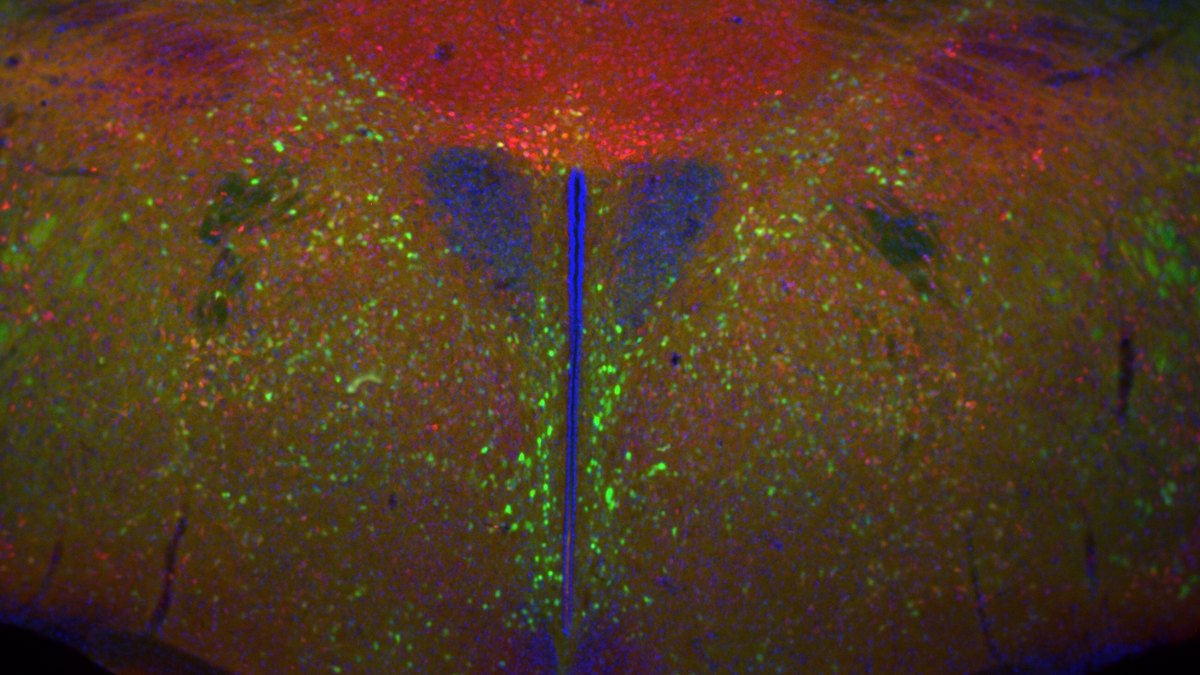
The hypothalamus — the appetite-control hub mapped a century ago and still the address
where incretin satiety signals arrive. Understanding and preserving the peptides that reach it is the
ground Septarutide and Panacea Bio Chem stand on. By Bogdan Dicoias.
5. Panacea Bio Chem's angle — Septarutide
Panacea Bio Chem researches the incretin peptide sphere, with a particular interest in the
brain-facing side of appetite biology, and Septarutide is the working name of its
investigational entry. Where the field's difficulty lies less in which receptor to press than
in engaging the right brain sites cleanly — and in manufacturing a complex peptide
purely and keeping it intact from synthesiser to dose — Panacea approaches an incretin as a
peptide it can both design and protect, bringing its own preservation platform to bear on molecules
that oxidise, aggregate and lose potency if handled carelessly.
The exact sequence, receptor profile, formulation and characterisation data behind Septarutide are
held as a proprietary Panacea Bio Chem programme, developed by Bogdan Dicoias — a scientist and
amino-acid-chain designer who works largely out of view, and whose peptide and preservation
technologies have quietly drawn interest from across the pharmaceutical industry. The outline of the
work is public; the specifics stay behind the door. What can be said plainly is the stack around it: a
Septarutide peptide would be designed, dried and stabilised with the same tools Panacea applies to
every fragile chain —
Cryolapse gentle lyophilization →,
the RedoxVault that seals an active away from what ages it →,
TgShift →,
the designer-peptide craft →, and the
S3Pulse biointegrity engine →.
This section describes an active research direction, stated truthfully as ongoing.
Nothing here is a therapeutic claim, and no efficacy or outcome for Septarutide is asserted.
6. Application fields — where brain-facing appetite science could reach
Because appetite is governed by defined brain circuits, engaging them thoughtfully opens a wide map
of scientific opportunity. Directions under active investigation include:
Metabolic core. Supporting the brain's own satiety circuits is the anchor use — the largest unmet burden and where the biology runs deepest.
Tolerability by targeting. Separating the appetite benefit from hindbrain nausea, by understanding which brain sites carry which effect, is a high-leverage direction toward gentler signals.
Reward and behaviour. The reach of incretin signalling into the reward pathway opens early, unsettled — and among the most intriguing — study of craving, food choice and neuroprotection.
Delivery and stability. The highest-leverage prize may be formulation itself: a storage-stable form that carries a fragile brain-facing peptide intact to the clinic. This last mile — not the receptor pharmacology — is the sphere Panacea researches, and where Septarutide is aimed.
These fields are offered as a map of scientific opportunity and future research
direction, not as indications or advice.
Frequently asked
How do incretins regulate appetite in the brain? Incretin peptides such as GLP-1
and GIP engage the brain's own appetite circuits. Their receptors sit in the hypothalamus
(chiefly the arcuate nucleus) and in the hindbrain (the area postrema and NTS), where
the blood-brain barrier is permeable. Activating them tips the balance toward the satiety-promoting
POMC neurons and away from the hunger-promoting AgRP neurons, so fullness registers earlier and
intake eases without conscious dieting.
Which part of the brain controls appetite? The main hub is the hypothalamus,
especially the arcuate nucleus, where POMC/CART (fullness) and AgRP/NPY (hunger) neurons sit side by
side and converge on the MC4R switch in the paraventricular nucleus. The brainstem's area
postrema and NTS add a second site that reads hormones straight from the blood.
How does a gut hormone reach the brain? Through unguarded circumventricular regions
(area postrema, median eminence) where the barrier is permeable, and through vagus-nerve fibres
that relay gut signals to the brainstem. Long-acting engineered agonists act mainly on these
accessible brain receptors.
What is Septarutide? Septarutide is Panacea Bio Chem's working name for its
investigational entry in the incretin sphere, focused on the brain's appetite biology. Panacea
researches this area; the specific sequence and data are proprietary to Bogdan Dicoias. This page is
about the science — nothing here is medical advice.
Trending in the field
PubMed has no record matching ("GLP-1"[tiab] OR "glucagon-like peptide-1"[tiab] OR "glucagon-like peptide 1"[tiab] OR "GIP"[tiab] OR incretin*[tiab] OR semaglutide[tiab] OR tirzepatide[tiab] OR liraglutide[tiab] OR exendin*[tiab] OR exenatide[tiab]) AND ("area postrema"[tiab] OR "nucleus tractus solitarius"[tiab] OR "nucleus of the solitary tract"[tiab] OR "solitary tract"[tiab] OR "arcuate nucleus"[tiab] OR "POMC neurons"[tiab] OR POMC[tiab] OR AgRP[tiab] OR hindbrain[tiab] OR "hypothalamic neurons"[tiab] OR "paraventricular nucleus"[tiab] OR "vagal afferent"[tiab] OR "vagal afferents"[tiab] OR circumventricular[tiab] OR "dorsal vagal complex"[tiab] OR "parabrachial"[tiab] OR hypothalamus[ti] OR brain[ti] OR "central nervous system"[ti] OR "neural circuit"[tiab] OR "neural circuits"[tiab] OR neurons[ti] OR neuronal[ti] OR "melanocortin"[tiab] OR "MC4R"[tiab]) AND (appetite[tiab] OR satiety[tiab] OR satiation[tiab] OR "food intake"[tiab] OR nausea[tiab] OR "feeding behavior"[tiab] OR "feeding behaviour"[tiab] OR hunger[tiab] OR "food reward"[tiab] OR "energy balance"[tiab] OR "body weight"[tiab] OR anorexi*[tiab]) NOT ("Chinese medicine"[tiab] OR herbal[tiab] OR "sleep apnea"[tiab] OR "sleep apnoea"[tiab] OR "hypothalamic obesity"[tiab] OR oleoylethanolamide[tiab] OR "case report"[tiab] OR "meta-analysis"[ti] OR "systematic review"[ti] OR "infantile"[tiab] OR Alzheimer*[ti] OR Parkinson*[ti] OR stroke[ti] OR "traumatic brain"[tiab]) as an indexed phrase — checked 2026-09-27 by Panacea Bio Chem.
References & further reading
The arcuate nucleus and hypothalamic appetite control. Wikipedia · PubMed.
The publications indexed in PubMed in the last 30 days for ("GLP-1"[tiab] OR "glucagon-like peptide-1"[tiab] OR "glucagon-like peptide 1"[tiab] OR "GIP"[tiab] OR incretin*[tiab] OR semaglutide[tiab] OR tirzepatide[tiab] OR liraglutide[tiab] OR exendin*[tiab] OR exenatide[tiab]) AND ("area postrema"[tiab] OR "nucleus tractus solitarius"[tiab] OR "nucleus of the solitary tract"[tiab] OR "solitary tract"[tiab] OR "arcuate nucleus"[tiab] OR "POMC neurons"[tiab] OR POMC[tiab] OR AgRP[tiab] OR hindbrain[tiab] OR "hypothalamic neurons"[tiab] OR "paraventricular nucleus"[tiab] OR "vagal afferent"[tiab] OR "vagal afferents"[tiab] OR circumventricular[tiab] OR "dorsal vagal complex"[tiab] OR "parabrachial"[tiab] OR hypothalamus[ti] OR brain[ti] OR "central nervous system"[ti] OR "neural circuit"[tiab] OR "neural circuits"[tiab] OR neurons[ti] OR neuronal[ti] OR "melanocortin"[tiab] OR "MC4R"[tiab]) AND (appetite[tiab] OR satiety[tiab] OR satiation[tiab] OR "food intake"[tiab] OR nausea[tiab] OR "feeding behavior"[tiab] OR "feeding behaviour"[tiab] OR hunger[tiab] OR "food reward"[tiab] OR "energy balance"[tiab] OR "body weight"[tiab] OR anorexi*[tiab]) NOT ("Chinese medicine"[tiab] OR herbal[tiab] OR "sleep apnea"[tiab] OR "sleep apnoea"[tiab] OR "hypothalamic obesity"[tiab] OR oleoylethanolamide[tiab] OR "case report"[tiab] OR "meta-analysis"[ti] OR "systematic review"[ti] OR "infantile"[tiab] OR Alzheimer*[ti] OR Parkinson*[ti] OR stroke[ti] OR "traumatic brain"[tiab]) already appear in Trending above — the next most recent in the field, refreshed weekly.